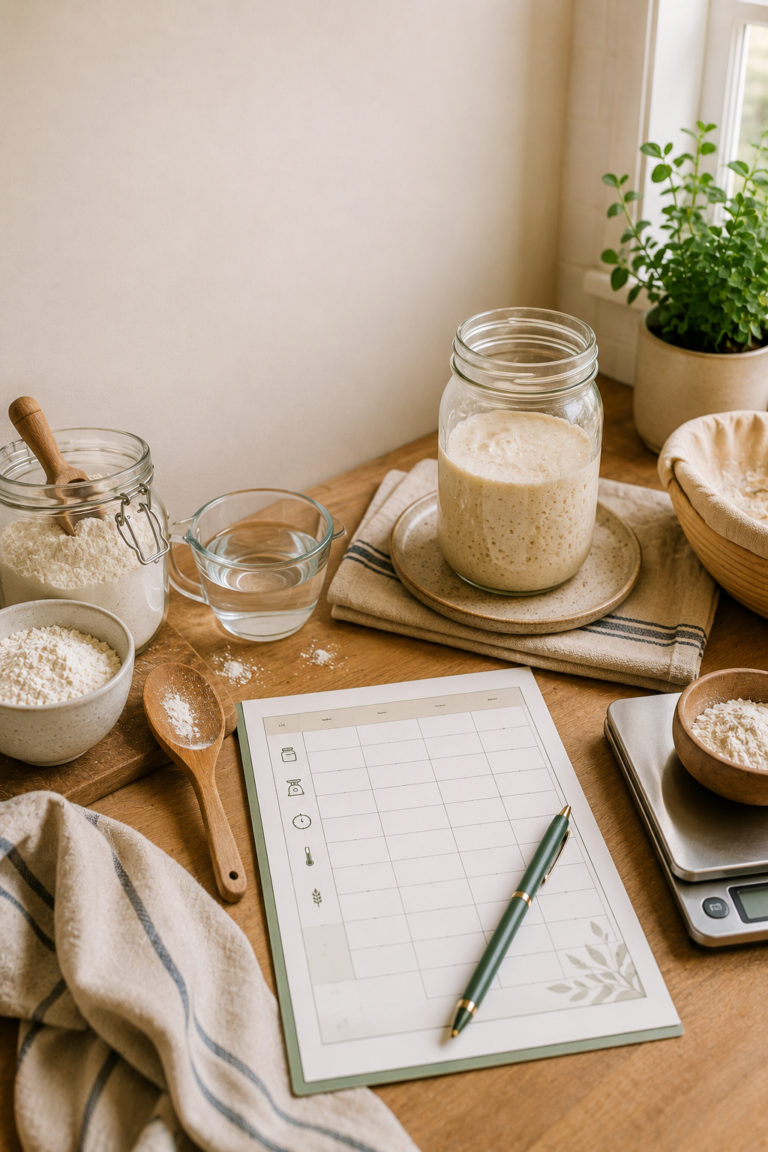

How To Track Sourdough Starter Feedings Without Guesswork
A sourdough starter can feel personal in a way most kitchen projects do not. Some days it doubles beautifully. Some days it sits there like it has made other plans. One week it smells pleasantly tangy, and another week you are wondering whether the jar is hungry, cold, overfed, ignored, or simply being dramatic.
Disclosure: This article contains affiliate links. As an Amazon Associate, Logik Press earns from qualifying purchases at no extra cost to you.
That is why tracking helps.
You do not need a complicated spreadsheet to maintain a starter. You need a small, repeatable note system that tells you what happened last time. A good sourdough starter feeding log helps you see patterns in timing, room temperature, flour type, water amount, rise, bubbles, smell, texture, and baking results.
The goal is not to control every variable perfectly. The goal is to stop guessing.
Sourdough starters are living cultures made from flour, water, yeasts, and bacteria. South Dakota State University Extension explains that time, temperature, moisture, bacteria, yeast, and unwanted particles all influence starter growth. Clemson Extension also notes that feeding keeps the microorganisms in a starter healthy and strong. In plain kitchen terms, your starter changes because its environment changes. Your notes help you notice which changes matter.
What To Track Every Time You Feed Your Starter
Start with the basics. Every feeding note should answer five simple questions.
- When did you feed it?
- How much starter did you keep?
- How much flour and water did you add?
- What did it look and smell like before feeding?
- What happened after feeding?
That is enough to begin. If you only track those details, you will already know more than you did when everything lived in memory.
For example, a simple entry might say:
- Monday, 7:30 a.m.
- Kept 30 grams starter
- Added 30 grams water and 30 grams flour
- Smelled tangy, had small bubbles, looked loose
- Doubled in about 6 hours at 72 degrees
That entry is not glamorous, but it is useful. If the next feeding takes 11 hours to rise in a colder kitchen, you have a clue. If the starter smells sharper after sitting longer, you have a clue. If a loaf turns out better after the starter doubled quickly, you have a clue.
Track Temperature Because It Changes The Story
Temperature is one of the biggest reasons a starter behaves differently from week to week. SDSU Extension notes that starters grow well around comfortable room temperature and that cooler temperatures slow growth and fermentation.
That matters because a starter that looks slow may not be weak. It may simply be cold.
You do not need laboratory precision. Write the room temperature if you know it. If you do not, write a plain note:
- Cold kitchen
- Warm afternoon
- Near sunny window
- Stored in refrigerator
- Left on counter overnight
Those notes help you avoid overreacting. A slow rise in a chilly kitchen may call for patience, not panic.
Track Rise Time, Not Just Feeding Time
A feeding time tells you when you added flour and water. Rise time tells you how your starter responded.
After feeding, note when the starter:
- Starts bubbling
- Rises noticeably
- Doubles, if it doubles
- Peaks
- Begins to fall
You can mark the jar with a rubber band or dry-erase marker after feeding. Then check the level later. If you are busy, do not hover over it all day. Just jot down the best observation you can.
The useful pattern is not one perfect number. The useful pattern is whether your starter usually rises quickly, slowly, or unpredictably under certain conditions.
Track Smell And Texture In Plain Words
Beginners often feel awkward describing sourdough starter. Use normal words.
Smell notes might include:
- Mild
- Tangy
- Fruity
- Yeasty
- Sharp
- Alcohol-like
- Unpleasant or foul
Texture notes might include:
- Thick batter
- Loose batter
- Bubbly
- Foamy
- Separated
- Dry around the edges
SDSU Extension describes a healthy starter as bubbly with a batter-like consistency, and it flags mold, foul smell, and green, pink, or orange discoloration as warning signs. Keep safety notes calm and practical: if you see signs that worry you, pause and check a trusted food-safety source before baking with it.
Track Discard So The Jar Does Not Take Over
Discard is the portion of starter removed before feeding. Clemson Extension explains that if you do not discard, the amount of starter can grow quickly because each feeding requires more flour and water.
Tracking discard helps you answer:
- How much did I remove?
- Did I save it for discard recipes?
- Did I label and refrigerate it?
- Am I feeding a manageable amount?
This is especially helpful if you are trying to reduce waste. Many bakers keep discard for pancakes, crackers, pizza crust, or other recipes, but the key is to label it and know how old it is.
Use A Simple Weekly Pattern
If you keep your starter on the counter, you may feed more often. If you keep it in the refrigerator, feedings may be less frequent. SDSU Extension notes that room-temperature starters need more frequent feeding than refrigerated starters. Your recipe, kitchen temperature, and starter maturity will still matter, so use your own log to build a pattern that fits your kitchen.
A simple weekly page can include:
- Date
- Time
- Starter kept
- Flour added
- Water added
- Room temperature
- Rise time
- Smell
- Texture
- Notes
- Bake result, if used
The bake result matters because feeding notes alone do not tell the whole story. A starter might look active, but the loaf notes reveal whether the dough rose well, tasted too sour, spread too much, or baked beautifully.
What To Do When A Feeding Goes Weird
Do not turn one odd day into a verdict. Starters have off days.
If your starter is slow, check temperature, feeding ratio, time since last feeding, and whether it has enough fresh flour. If it separates, note the liquid and timing. If it smells unusually strong, write that down and compare it with the last few feedings. If you see mold, discoloration, or a foul smell, stop and verify with a trusted food-safety source.
The log helps you avoid two beginner traps:
- Changing everything at once
- Forgetting what changed
Change one thing, then track what happens. That is how you learn your own starter instead of chasing every sourdough opinion online.
Make The Log Easy Enough To Actually Use
The best sourdough log is the one you will use when the counter is messy and the jar is sticky.
Keep the fields short. Use checkboxes when possible. Leave room for imperfect notes. A long blank journal page can feel too open when all you need to write is “fed at 8 p.m., slow rise, cold kitchen.” The point is to capture the pattern, not to write a diary entry every time.
It also helps to keep the log near the starter. If the notebook lives in another room, you may skip it. If the printable is on a clipboard beside the jar, the habit is easier.
For beginners, consistency matters more than detail. A short note written every feeding teaches you more than a perfect entry written once a month.
Free Sourdough Starter Feeding Log
Pair this post with the free Logik Press sourdough starter feeding log. The printable should give the reader an easy place to track:
- Feeding date and time
- Starter, flour, and water amounts
- Room temperature
- Rise notes
- Smell and texture
- Discard notes
- Baking result notes
Make One Note Right Before You Bake
If you are using the starter for bread, add one final note before it goes into the dough: how ready did it look? Write down whether it was bubbly, domed, flat, recently peaked, past peak, mild, sour, loose, thick, or slower than usual.
That note can explain a lot later. If the loaf rises slowly, the starter note may show that it was not at its strongest. If the flavor is sharper than expected, the feeding pattern may explain it. If the bake goes beautifully, you have a better chance of repeating the timing.
The goal is not to judge the starter. The goal is to make the invisible parts of sourdough easier to notice.
Internal Links
- Link to the companion post: sourdough baking journal
- Link from the companion post back to this starter-feeding article.
- Link to the free feeding log PDF.
Sources Used
- South Dakota State University Extension, Sourdough Starters: SDSU Extension sourdough starter guidance
- Clemson Cooperative Extension HGIC, All About Sourdough Discard: Clemson Extension sourdough discard guidance
- UC Agriculture and Natural Resources Master Food Preserver, Can This Sourdough Starter Be Saved?: UCANR sourdough starter troubleshooting
Helpful Next Step
If the reader wants a more organized place to keep feeding notes and bake results together, add the Sourdough Starter and Baking Journal at the end as the next step:
- Sourdough Starter and Baking Journal: View on Amazon
Keep the CTA soft. The reader came for help with the starter first. The journal is useful because it keeps the pattern in one place.