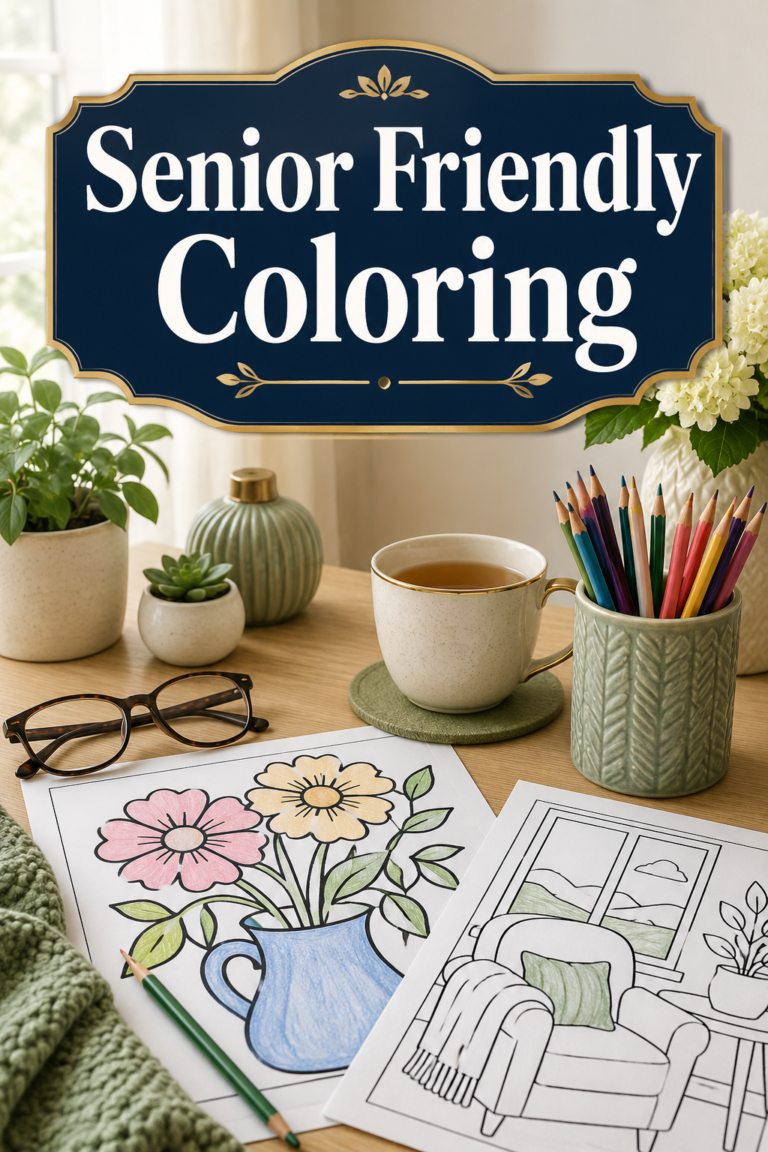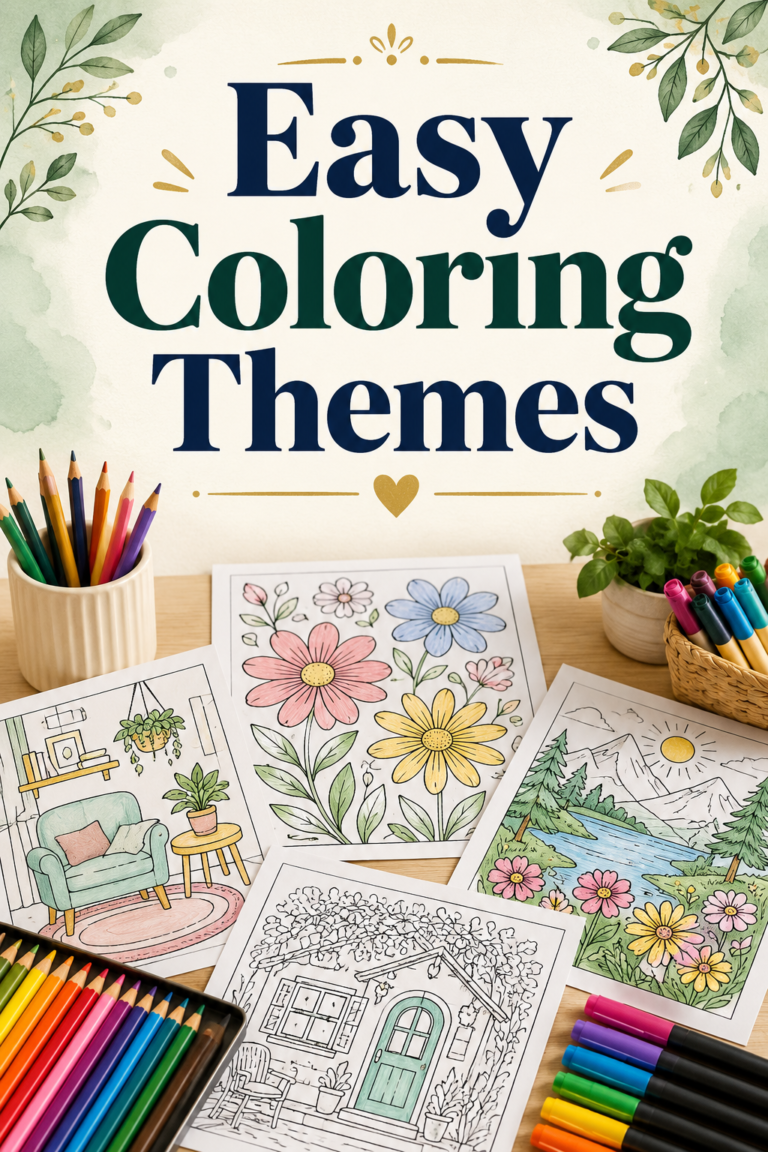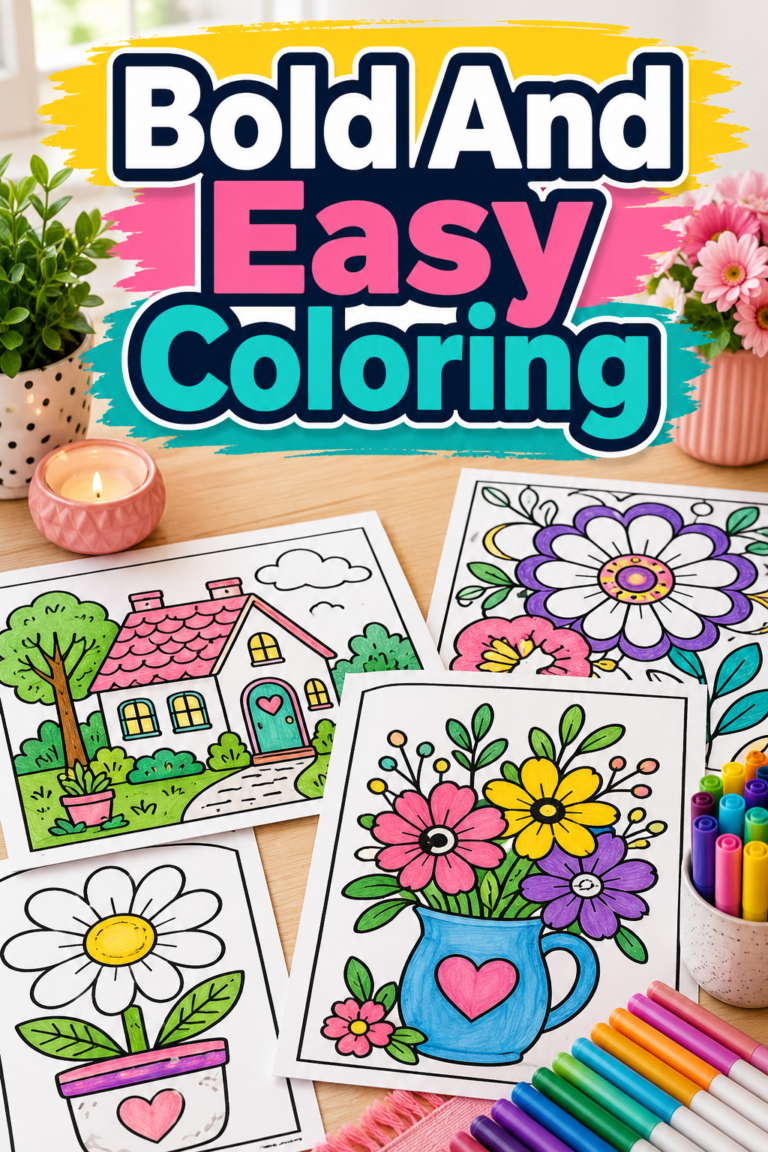

Adult coloring is popular for a simple reason: it gives your mind something gentle to do. You do not have to be an artist. You do not have to make a masterpiece. You can sit down with a page, choose a color, and let your attention move from the busy parts of the day into one small creative task.
That shift can feel surprisingly helpful. Many adults spend the day switching between screens, messages, chores, work, family needs, and background worries. Coloring creates a different rhythm. The page asks for focus, but not the kind that feels demanding. It gives your hands something to do while your mind settles.
Why Coloring Feels Calming
Coloring is not magic, and it is not a replacement for medical care or mental health support. But as a quiet hobby, it can support a more relaxed routine. The shapes are already there, so you are not facing a blank page. The decisions are small: choose a color, fill an area, move to the next shape. That structure helps many people start without overthinking.
There is also comfort in repetition. Shading a row of leaves, filling a pattern, or adding color to a simple room scene can feel steady. Repetitive creative tasks can help signal to your body that it is time to slow down. You are still engaged, but you are not rushing.
If you are new to the hobby, start with our primer on what bold and easy coloring is. Simple pages are often the best entry point because they remove pressure and make it easier to finish.
Start With Easy Pages
One mistake beginners make is choosing pages that are too detailed. A highly intricate page can be beautiful, but it may also feel like homework if you are tired. Easy coloring pages with bold lines, larger spaces, and clear shapes let you enjoy the activity without feeling trapped by tiny sections.
Easy does not mean boring. A page with flowers, cozy rooms, simple animals, fashion sketches, food themes, or seasonal scenes can still be satisfying. The key is choosing a page that matches the energy you actually have. If you only have fifteen minutes, choose something you can make visible progress on.
For more theme ideas, visit top easy coloring themes for adults who want to relax. Themes matter because the subject of the page can change the mood of your session.
Create A Low-Pressure Setup
You do not need a large supply collection. A few colored pencils, markers, or crayons are enough to begin. In fact, limiting your supplies can make the first session easier. Too many colors can create decision fatigue, especially if you are coloring to unwind.
Try choosing a small palette before you start. Pick three to five colors that fit the mood: soft greens and blues for calm, warm yellows and pinks for cheerful pages, or deep purples and golds for dramatic fantasy pages. A limited palette helps the finished page look more cohesive and makes the process feel less scattered.
Keep your supplies visible and easy to reach. A small pouch, cup, basket, or drawer can make coloring easier to start. The less setup required, the more likely you are to use the hobby when you actually need a quiet break.
Use Coloring As A Transition
Coloring works well as a transition activity. Use it after work before you jump into evening chores. Use it after dinner instead of picking up your phone. Use it before bed as a gentle way to step away from screens. You do not need a long session. Ten minutes can be enough to create a cleaner boundary between one part of the day and the next.
Make the session specific. Instead of saying, “I should color more,” try saying, “I am going to color one small section while my tea cools,” or “I am going to use three colors before bed.” Tiny goals are easier to keep, and they still give you the benefit of a quiet creative pause.
If you like routines, keep a note on the page with the date and what you used. Over time, you may notice which styles help you relax most. Some people prefer florals. Others like geometric patterns, cozy home scenes, dark fantasy pages, or pop-art fashion. Your preferences are useful data.
Pair Coloring With A Simple Cue
A cue makes the habit easier to repeat. You might color only when a certain lamp is on, when a cup of tea is beside you, or when your evening playlist starts. The cue tells your brain that this is the slower part of the day. Over time, the setup itself can become part of the calming effect. This is why keeping the hobby small is helpful: if it takes only a minute to begin, you are more likely to actually use it.
Try A Few Beginner Techniques
You can color casually forever, and that is perfectly fine. But learning a few simple techniques can make the hobby more satisfying. Start with light pressure. Many beginners press hard right away, which can make colors difficult to layer. A lighter hand gives you more control and lets you build color slowly.
Next, try shading from dark to light. Choose one corner or edge of a shape and make it darker, then soften the color as you move across the space. This can make flowers, clothing, leaves, and simple objects feel more dimensional.
You can also outline a shape with a slightly darker color and then fill the center with a lighter shade. This is easy, fast, and friendly for bold pages. If you want more practical ideas, read coloring techniques that help beginners look more polished.
Choose Themes That Match Your Mood
Different themes create different experiences. Cozy coloring pages can feel comforting after a long day. Floral pages can feel cheerful and easy. Fashion pages can feel playful and expressive. Dark fantasy pages can feel rich and dramatic, especially if you like deep colors and black backgrounds.
For a bold, stylish option, see our post on pop-art beauty and fashion coloring ideas. If you like moody pages, read how to enjoy dark fantasy black background coloring pages. Having a few different styles available makes it easier to choose a page that fits your mood instead of forcing one style every time.
Make Finished Pages Useful
Finished coloring pages do not have to pile up. You can keep them in a binder, use them as bookmarks, tuck them into a journal, frame a favorite, or send one to a friend. You can also keep a small folder of finished pages as a visual record of quiet time you actually took for yourself.
If you struggle to rest, that record can matter. Many adults know they need slower hobbies, but they do not always give themselves credit for doing them. A finished page is proof that you paused, made something, and let your attention settle for a while.
Keep The Hobby Gentle
The fastest way to ruin adult coloring is to turn it into another performance. You do not have to post the page online. You do not have to compare your shading to anyone else’s. You do not have to finish every page. You are allowed to color halfway, abandon a page, try a strange palette, or use the same favorite color again and again.
The point is not perfection. The point is a small creative habit that is easy to return to. Coloring is useful because it can meet you where you are. Tired? Choose a simple page. Energized? Try a detailed one. Restless? Use bold markers. Quiet? Use pencils and shade slowly.
What Not To Worry About
You do not need expensive supplies to get the benefits of a coloring habit. You also do not need to understand color theory before you start. If choosing colors feels hard, copy a palette from something nearby: a favorite mug, a throw blanket, a plant, a sunset photo, or a book cover. If your colors look strange together, that is still useful practice. The page is allowed to be playful. The more you remove pressure from the activity, the easier it becomes to return to it when you need a calm, creative reset.
Do not worry about finishing in one sitting either. Some of the most relaxing pages are the ones you return to over several evenings. Leaving a page half done can actually make the habit easier, because tomorrow’s starting point is already waiting.
Helpful References
Mayo Clinic Health System offers a reader-friendly overview of why coloring can be good for your health. The National Center for Complementary and Integrative Health also explains relaxation techniques and stress, which is useful context for low-pressure calming routines. For research context, the National Library of Medicine includes studies on structured coloring and mood, including this review on art-based activities and mental health outcomes.
Start with one page, one small palette, and one calm session. That is enough. Adult coloring works best when it stays simple, repeatable, and kind.