
Disclosure: This post may include Amazon affiliate links. As an Amazon Associate, Logik Press may earn from qualifying purchases at no extra cost to you.
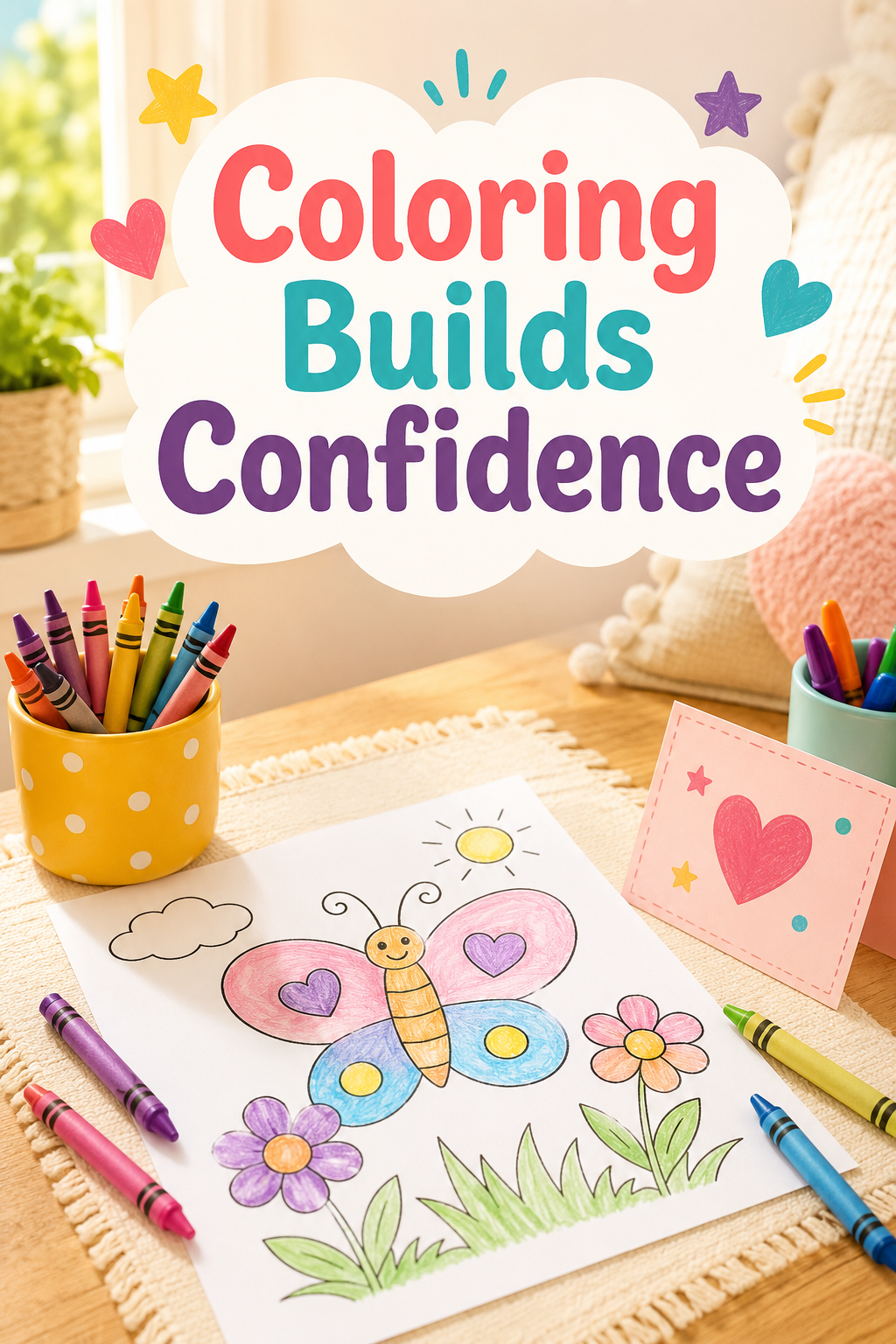
Coloring builds confidence in kids when the activity feels safe, playful, and supported. That does not mean coloring magically solves everything. It means a simple coloring page can give a child a low-pressure place to make choices, practice patience, use their hands with control, tell a story, and finish something they can feel proud of.
For parents, that is the useful part. Coloring is easy to start. It does not require a screen, a lesson plan, or expensive supplies. A child can sit down with crayons and a page, make one small decision, then another, then another. Over time, those small decisions can become a quiet kind of practice.
The parent role matters. A child who feels corrected the whole time may start protecting themselves from the activity. A child who feels noticed and encouraged may be more willing to try, keep going, and show the finished page. That is why Logik Press keeps coming back to three words for this lane: patience, praise, and presence.
A quick note: When we talk about confidence here, we are not talking about perfection. We are talking about the feeling a child gets when someone sits nearby and says, "I see you trying. Keep going."
Here are five practical ways coloring can support confidence without turning the moment into schoolwork.
1. Coloring Gives Kids Low-Risk Choices
Children spend a lot of their day being told what to do: wake up, get dressed, eat this, stop that, hurry up, sit down, clean up. A coloring page gives them a small place where their choices can lead.
They can choose the page. They can choose the first color. They can decide whether the cat is gray, purple, orange, or rainbow. They can color the background first or ignore it completely. These are small decisions, but small decisions matter because they let children experience ownership.
Confidence grows when kids get to make choices that are safe to make.
The parent does not need to approve every color. Instead, try curiosity:
"What made you choose that color?"
"Which part do you want to do next?"
"Do you want this page to feel bright, silly, calm, or wild?"
Questions like that tell the child their thinking matters. They also keep the parent from sliding into correction mode.
Of course, some children get overwhelmed by too many choices. If that happens, narrow the options:
"Do you want blue or green first?"
"Do you want the animal page or the garden page?"
"Do you want crayons or markers?"
That still gives the child a voice while keeping the moment manageable.
2. Coloring Makes Effort Visible
One helpful thing about coloring is that effort becomes visible. A blank page slowly fills with color. A child can see that their hand movement changed the page. They can point to what they finished and say, "I did that."
This is why coloring can be especially satisfying for kids who need small wins. The task has a clear start and finish, but the finish does not need to be perfect. A page can be partly colored and still show effort. A page can go outside the lines and still be theirs.
Parents can strengthen this by praising effort instead of only praising the final picture.
Try:
"You worked on that corner for a long time."
"You kept going even when that part was tricky."
"You tried a new color combination."
"You came back to finish the page after your break."
That kind of praise teaches a better lesson than "perfect." It tells the child that attention, persistence, and trying again are worth noticing.
This also helps when a child says, "It looks bad." Instead of arguing, you can answer gently:
"It does not have to be perfect to be yours."
"What part do you like best?"
"Do you want to add something, take a break, or save it for later?"
The goal is not to force pride. The goal is to leave the door open for the child to keep creating.
3. Coloring Lets Kids Practice Patience In Small Pieces
Patience is hard when the task feels too big. Coloring can make patience smaller.
Instead of asking a child to finish a whole page, you can help them break the activity into pieces:
"Color one flower."
"Fill in the wheels."
"Choose three colors for the background."
"Do the animal first, then decide if you want to keep going."
This matters because children often build stamina in steps. A child who cannot sit for a long activity might be able to focus on one small section. A child who gets frustrated halfway through might be able to pause and return later.
That return is a confidence moment. It teaches the child that stopping does not always mean quitting forever. Sometimes it means resting, then trying again.
Parents can support this by making the activity flexible:
"We can do five minutes."
"You can finish tomorrow."
"You can color one part and call it done."
"You can choose a smaller page."
This approach respects the child while still building the habit of staying with something. It also reduces the power struggle that can happen when adults turn every activity into completion.
At Logik Press, we want parents to see coloring as a little practice field. Kids can practice patience, but the practice should still feel safe.
4. Coloring Supports Hand Control Without Feeling Like Homework
Before handwriting feels natural, children need repeated chances to use their hands, fingers, eyes, and attention together. Coloring can support that practice in a gentle way.
When a child colors, they may practice:
- Holding a crayon or pencil
- Changing pressure
- Moving in different directions
- Staying near a boundary
- Filling big and small spaces
- Turning the page
- Coordinating what they see with what their hand does
This does not mean every coloring page needs to become a fine motor lesson. In fact, it is usually better when it does not feel like a lesson at all. The practice is already built into the activity.
Parents can choose pages that match the child instead of forcing pages that are too detailed. Younger kids may need big open spaces and chunky crayons. Older kids may enjoy smaller details and more precise coloring.
If the child struggles, avoid shaming the grip, speed, or messiness. Try:
"Do you want a bigger crayon?"
"Would a larger page feel easier?"
"Want to color the big spaces first?"
"Let's take a hand break."
Support keeps confidence intact. Correction can wait. If parents have concerns about motor skills, vision, or development, they should talk with a qualified professional. The blog can encourage practice, but it should not diagnose or promise outcomes.
5. Coloring Creates A Finished Win Kids Can Share
Kids often like having something to show. A finished coloring page is concrete. They can hold it up, tape it to the fridge, give it to a grandparent, place it in a folder, or turn it into a card.
That sharing moment can be powerful because it says, "My work matters."
The parent can make the moment simple:
"Do you want to sign your name?"
"Should we save this in your art folder?"
"Who would like to see this?"
"What should we call this picture?"
Naming the page can make the child feel like an artist or storyteller. It also turns coloring into language practice without making it formal.
If a child does not want to share, that is okay too. Some children are private with their work. Respecting that choice is another way to build trust.
For children who do like sharing, try creating a "little wins" folder. Add finished pages over time. Every few weeks, look back and say:
"Look how many pages you made."
"You used to pick one color, and now you are trying more."
"You finished this one even though it took two days."
That helps kids see growth without turning it into a comparison.
Parent Scripts That Help
Here are a few phrases parents can keep nearby:
"Tell me about this part."
"I like how you kept trying."
"You can make it your way."
"It does not have to be perfect to be finished."
"Do you want help, or do you want me to watch?"
"Which part felt tricky?"
"Which part are you proud of?"
These phrases keep the focus on effort, choice, and connection.
Free Printable Idea
Create a Little Wins Coloring Page with:
- A simple animal or garden scene
- A small "I made this" signature line
- Three parent prompts
- A tiny "What I tried today" reflection box
This gives parents a practical tool before any product offer.
Light Book Offer
After the free printable, add a soft book bridge:
If your child enjoys gentle, screen-free coloring time, Logik Press kids activity books can give you ready-made pages for quiet afternoons, parent-child conversation, and small creative wins.
Related Reading
- Top 10 Screen-Free Activities For Quiet Afternoons
- What To Say When Your Child Says Their Coloring Page Is Bad
Helpful Sources
- HealthyChildren.org: How To Make A Family Media Plan
- American Academy of Pediatrics: Screen Time Guidelines
- HealthyChildren.org: How To Build Healthy Digital Habits