
Disclosure: This post may include Amazon affiliate links. As an Amazon Associate, Logik Press may earn from qualifying purchases at no extra cost to you.
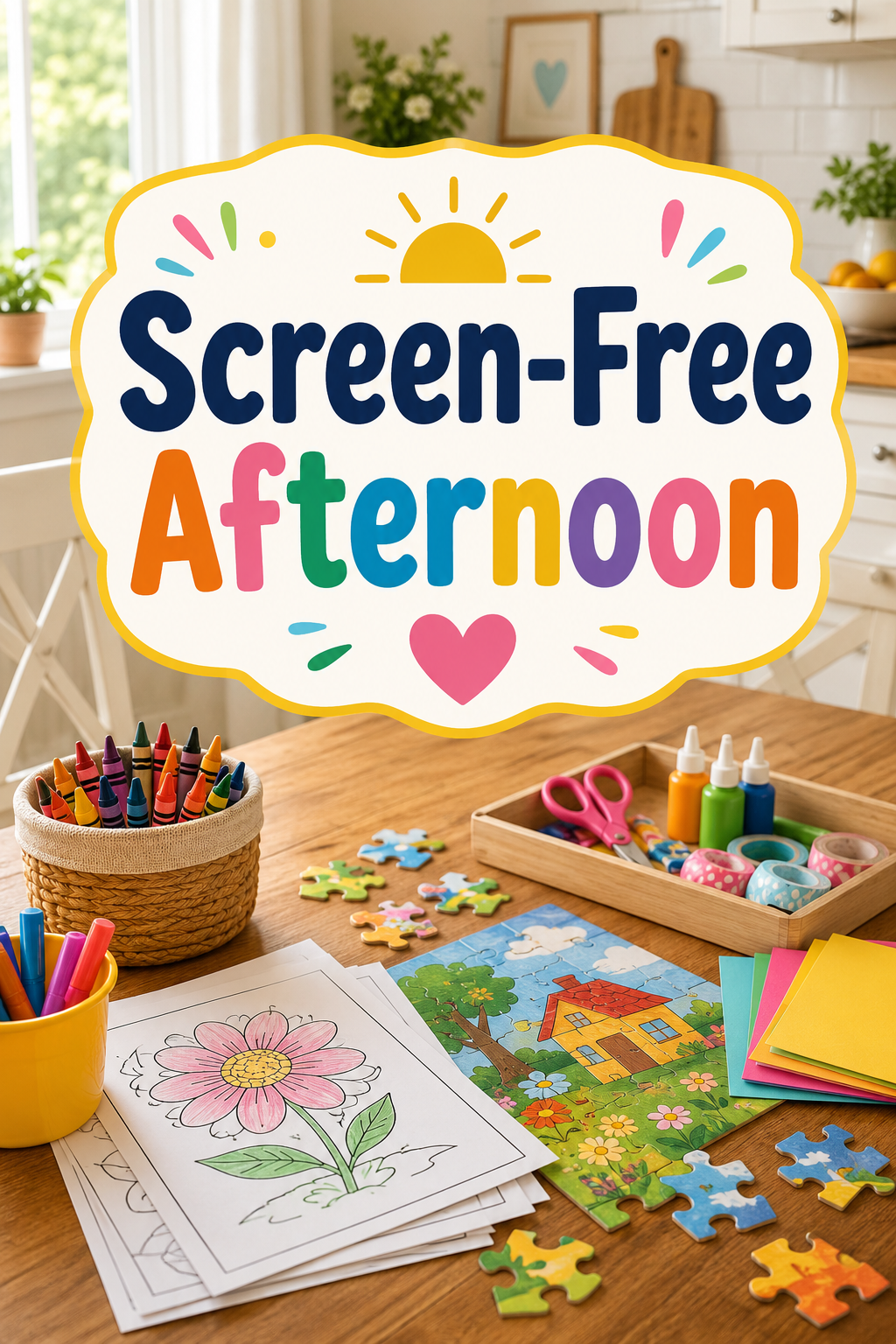
The best screen-free activities for kids do not need to be complicated. A quiet afternoon can turn into something useful with a few crayons, a puzzle page, a book, a small tray of craft supplies, or a parent sitting close enough to notice the effort. The goal is not to recreate school at the kitchen table. The goal is to give kids a simple place to practice attention, choice-making, hand control, patience, and confidence.
Screen-free time works best when it feels possible. Parents do not need a perfect playroom or a long activity plan. A small basket, a few printable pages, and a calm rhythm can carry the afternoon.
A quick note: One thing we believe at Logik Press is that kids do not need perfect activities as much as they need patience, praise, and presence. A parent nearby, saying "I see you working on that," can turn a simple page into a small confidence win.
Here are ten screen-free activities that are easy to set up, gentle enough for quiet time, and flexible enough for different ages.
1. Side-By-Side Coloring
Side-by-side coloring is one of the easiest screen-free activities because it asks very little from the parent and still gives the child a sense of connection. You can color your own page while your child colors theirs, or you can sit nearby and comment on what you notice.
The key is to avoid taking over. Let the child choose the page, the first color, and the pace. If they color the sky purple or make a puppy green, that is not a problem to fix. It is a choice to notice.
Try saying:
"You picked a bright color for that part."
"You stayed with that page for a while."
"Which part do you want to color next?"
This keeps the activity low-pressure. Coloring can support fine motor practice because children use grip, pressure, direction, and eye-hand coordination, but it should still feel like play.
2. Color And Tell A Story
This activity turns a coloring page into a conversation. After your child colors for a few minutes, ask them what is happening in the picture. If the page has animals, ask where they are going. If it has a house, ask who lives there. If it has a garden, ask what might grow next.
You are not testing them. You are inviting imagination.
This is especially useful for kids who like to talk while they work. It can help them practice describing choices and building little stories. You can follow their lead instead of steering the story.
For a printable freebie, pair this post with a "Color and Tell" page that includes one picture and three parent prompts:
- What is happening here?
- What color did you choose first?
- What should happen next?
3. A Puzzle Page With One Small Goal
Puzzle pages are helpful because they give kids a clear task without needing a screen. Word searches, mazes, spot-the-difference pages, and matching pages all work well for quiet afternoons.
The trick is to make the goal small. Instead of saying, "Finish the whole page," try:
"Find five words."
"Solve one row."
"Circle three animals."
"Try the maze for five minutes."
Small goals make the activity less intimidating. They also help kids experience progress without turning the page into a performance.
For younger kids, use visual puzzles with larger spaces. For older kids, use word searches, simple logic puzzles, or themed activity pages.
4. Build A Quiet-Time Activity Basket
A quiet-time basket is a small collection of activities that only comes out during certain moments: after lunch, before dinner, during a sibling's nap, or when everyone needs a reset.
A good basket might include:
- Crayons or colored pencils
- A few coloring pages
- One small puzzle book
- Stickers
- Blank paper
- A glue stick
- Safety scissors if age-appropriate
- A small notebook
Keep it simple. A few good options are better than a crowded craft bin.
Rotate the contents once a week to keep the basket fresh.
5. Sticker Sorting And Tiny Collages
Stickers can become more than decoration. Give your child a sheet of stickers and a blank page, then ask them to sort by color, size, animal, shape, or feeling. After sorting, they can turn the stickers into a tiny collage.
For example:
"Can you make a garden with all the flower stickers?"
"Can you put the animals that fly at the top and the animals that walk at the bottom?"
"Can you make a silly scene?"
This activity gives kids choices while still offering enough structure to keep them engaged.
6. Read One Page, Draw One Thing
If your child likes books but does not want to sit for a long reading session, try a read-and-draw routine. Read one page or one short scene, then ask your child to draw or color one thing they remember.
It could be a character, a house, a tree, a vehicle, or even just a color that matched the mood of the story.
This works well because it connects reading with creative output. The child is not just listening; they are responding.
Keep the instruction gentle:
"Draw one thing you remember."
"What part of the page stood out?"
"What color would this story be?"
7. Nature Tray Observation
A nature tray is simple: place a few safe outdoor items on a tray and let your child observe, sort, draw, or describe them. Leaves, smooth rocks, pinecones, flowers, seed pods, and shells can work well.
The screen-free part matters, but so does the slow looking. Kids can compare shapes, textures, sizes, and colors. They can draw what they see or make a little pattern on the tray.
This activity is especially good for children who need something hands-on but calm.
Safety note: use clean, child-safe items and supervise young kids who still put things in their mouths.
8. Big-Line Tracing And Coloring
Before writing becomes comfortable, many kids need time to practice hand control in playful ways. Big-line tracing pages can help because they offer a path to follow without the pressure of letters.
Use pages with swirls, waves, roads, loops, ladders, zigzags, or big shapes. After tracing, children can color the spaces around the lines.
This activity can support pre-writing practice, but the tone matters. If it starts feeling like a worksheet battle, back off. Keep it playful:
"Can your crayon drive down this road?"
"Can you follow the loop like a roller coaster?"
"Which path should the turtle take?"
That shift makes the practice feel like play instead of correction.
9. Finish-The-Picture Prompts
Finish-the-picture prompts give kids a half-started idea and invite them to complete it. You might draw a circle and ask what it could become: a sun, face, cookie, planet, or flower.
You can also draw:
- A door
- A road
- A tree trunk
- A fish body
- A rocket shape
- A blank animal face
Then let your child finish the page their way.
This activity is great for confidence because there is no single right answer.
Try:
"I never would have thought of that."
"You turned one shape into a whole picture."
"Tell me about this part."
10. Quiet Kindness Cards
Quiet kindness cards combine art, writing, and connection. Give your child a small folded paper or blank card. Ask them to draw something for a grandparent, teacher, sibling, friend, or neighbor.
You can write the words if the child is too young:
"I hope you have a good day."
"Thank you."
"I made this for you."
"You are loved."
The goal is helping the child see that their creative effort can brighten someone else's day.
Instead of coloring only to fill time, they are making something to share.
The Best Setup: Patience, Praise, And Presence
The activity matters, but the parent tone matters more. Kids often respond to the feeling around the activity: Is this safe? Am I being corrected? Is my effort noticed? Can I try without being embarrassed?
Patience means giving the child time to start, pause, restart, and finish imperfectly.
Praise means naming the effort instead of only judging the result.
Presence means being close enough to notice, talk, and celebrate, even if you are not controlling the page.
That is the heart of this cluster for Logik Press. We are not trying to make childhood more complicated. We are trying to make small learning moments easier to repeat.
Free Printable Idea
Create a Quiet Afternoon Activity Pack with:
- One coloring page
- One simple puzzle page
- One color-and-tell story prompt
- One finish-the-picture page
- One parent prompt card
This gives the reader something useful before any book offer appears.
Light Book Offer
If the reader wants a ready-made activity option, add a soft callout after the freebie:
Looking for more screen-free pages? Logik Press kids activity books are designed to give children simple, confidence-building pages they can color, solve, and share. Add approved links for Curious Kids Learning Adventures and Cute Animal Garden Friends .
Related Reading
- 5 Ways Coloring Builds Confidence In Kids
- What To Say When Your Child Says Their Coloring Page Is Bad
Helpful Sources
- HealthyChildren.org: How To Make A Family Media Plan
- American Academy of Pediatrics: Screen Time Guidelines
- HealthyChildren.org: How To Build Healthy Digital Habits