
This post contains Amazon affiliate links. As an Amazon Associate, Logik Press may earn from qualifying purchases at no extra cost to you.
Sleep advice can feel impossible when life is already full. Go to bed earlier. Wake up at the same time. Stop scrolling. Drink less caffeine. Exercise, but not too late. Make the room cool, dark, and quiet. All of that may be useful, but a tired person does not need a giant life makeover at 9 p.m. They need one or two changes they can actually test.
This guide is not medical advice and it is not a promise to fix insomnia, stress, pain, shift work, anxiety, or a health condition. If sleep problems are severe, long-lasting, sudden, or tied to breathing issues, medication, mood, or safety, it is worth talking with a qualified health professional. What a simple sleep log can do is help you notice patterns, prepare better questions, and stop guessing about what helps.
Start With A Repeatable Wind-Down
The CDC notes that a sleep diary may include details such as bedtime, waking during the night, naps, exercise, caffeine or alcohol, and medications in its overview of sleep habits. That list is helpful because it shows how many ordinary details can influence the night. You do not need to track everything forever. Start with the evening routine you can repeat most nights.
Choose a wind-down window that feels realistic. For some people, ninety minutes is wonderful. For others, twenty minutes is more honest. The routine might include dimming lights, setting up clothes for tomorrow, washing up, taking medicine as directed, stretching gently, reading, journaling, or putting the phone across the room. The key is to make the routine predictable enough that your body and mind recognize the transition.
Change One Thing At A Time
When you change five habits at once, you cannot tell what helped. If you stop caffeine after noon, dim the lights, change dinner time, add a walk, and start reading before bed all in the same week, the results may improve but the lesson will be blurry. A tracker works best when you test one change for several nights.
Try this: pick one evening change and keep it for seven nights. Examples include turning off bright screens thirty minutes earlier, moving caffeine earlier in the day, setting a consistent lights-out target, writing tomorrow’s first three tasks before bed, or keeping the room cooler. At the end of the week, look at your notes. Did you fall asleep more easily? Wake less often? Feel better in the morning? Or did nothing change? Both answers are useful.
Watch Light And Screens
Evening light is one of the easiest variables to notice. The CDC’s sleep and heart health guidance includes habits such as keeping a regular schedule and avoiding artificial light close to bedtime in its sleep and heart health overview. You do not have to make your house feel like a cave at sunset. Start with practical moves: dim overhead lights, use warmer lamps, lower screen brightness, or set a phone cutoff.
If a screen cutoff feels impossible, test a smaller boundary. No phone in bed. No social apps after a certain time. Audio only while getting ready. Charging station outside the bedroom. The best sleep routine is not the most perfect one. It is the one you can repeat without fighting yourself every night.
Make The Bedroom Easier To Sleep In
Room setup is not glamorous, but it can make a difference. Track temperature, noise, light, and comfort for a few nights. Was the room too warm? Did a hallway light leak in? Did a pet wake you? Was the pillow uncomfortable? Did outside noise make it harder to settle? These details are easy to forget by morning, especially after a rough night.
Small room changes are often easier than big lifestyle changes. Try a cooler room, a fan, a sleep mask, blackout curtains, earplugs, a different blanket, or moving a bright charger light. Test one change at a time if you can. If the room is cooler and the phone is gone and the bedtime changed all at once, you may feel better, but you will not know which change mattered most.
Use A Worry Parking Lot
Many people do not stay awake because they forgot how to sleep. They stay awake because the brain finally has quiet enough to list every unfinished task. A worry parking lot is a simple page where you write the thought down and give it a next step. Pay bill tomorrow. Ask about appointment. Pack lunch. Check email at 9 a.m. The note tells your brain the thought has been captured.
This does not solve every kind of stress, but it can reduce the loop of repeating the same task in your head. Keep the page short. You are not journaling for an hour. You are moving loose thoughts out of your mind and into a place you can review tomorrow.
Notice Caffeine, Alcohol, Food, And Timing
Some people are sensitive to caffeine late in the day. Others notice sleep changes after heavy meals, alcohol, late sugar, or inconsistent dinner timing. A simple log lets you notice your own pattern. Write down the timing, not a guilt story. Had coffee at 3 p.m. Late dinner at 9. Two glasses of wine. Spicy meal. Skipped dinner. These notes help you compare nights without turning the tracker into a place for judgment.
If you take medicine, do not change timing or dose on your own. Use the tracker to record what happened and ask a provider or pharmacist if you have questions. The goal is to create a useful record, not to experiment with medications without guidance.
Pay Attention To Naps And Daytime Energy
Naps are personal. For some people, a short nap helps them function. For others, a late or long nap makes bedtime harder. Instead of guessing, track it. Write down whether you napped, what time it started, how long it lasted, and how bedtime felt later. Do the same with daytime energy. A night that looks short on paper may still feel okay, while another night with enough hours may leave you tired.
The morning score helps connect the night to the next day. If you only track bedtime and wake time, you may miss the real question: how did you feel and function? The answer can help you choose which routine changes are worth keeping.
Create A Morning Score
A sleep tracker is easier to use when the morning review is simple. Try rating energy from one to five, mood from one to five, and wake-up difficulty from one to five. Add one short sentence: what I think helped or hurt. That sentence might say, phone too late, room was hot, good walk after dinner, stress about bill, or woke at 3 and could not settle.
Over time, those little notes become more useful than a single bad night. You may notice that Sunday nights are harder, late naps affect bedtime, hot rooms cause wake-ups, or morning light helps your rhythm. Patterns are the point. A single night can be random. Ten nights can start to tell a story.
Build A Gentle Reset For Rough Nights
Everyone has rough nights. A good routine should include a reset plan so you do not spiral when sleep does not come easily. Keep the plan boring and kind. If you are awake and frustrated, try a quiet activity in low light, a simple breathing pattern, or a few pages of a calm book. Avoid turning the night into a performance review of your entire life.
Write down the rough night without making it a failure. Bad night, awake around 2, warm room, stressful day, no nap. That is enough. The next evening, return to the routine. Sleep tracking is most helpful when it reduces pressure, not when it becomes another thing to do perfectly.
Know When To Get Help
A tracker is helpful, but it should not become a reason to ignore a real problem. If you snore loudly, gasp or stop breathing during sleep, feel dangerously sleepy while driving, have sudden sleep changes, struggle for weeks, or suspect a medicine or health condition is affecting your sleep, bring the notes to a healthcare professional. The notes can make that conversation clearer because you are not relying on memory alone.
The National Heart, Lung, and Blood Institute overview of sleep deprivation and deficiency explains that sleep problems can affect health, safety, mood, and daily function. That does not mean every rough night is a crisis. It means patterns are worth taking seriously when they persist.
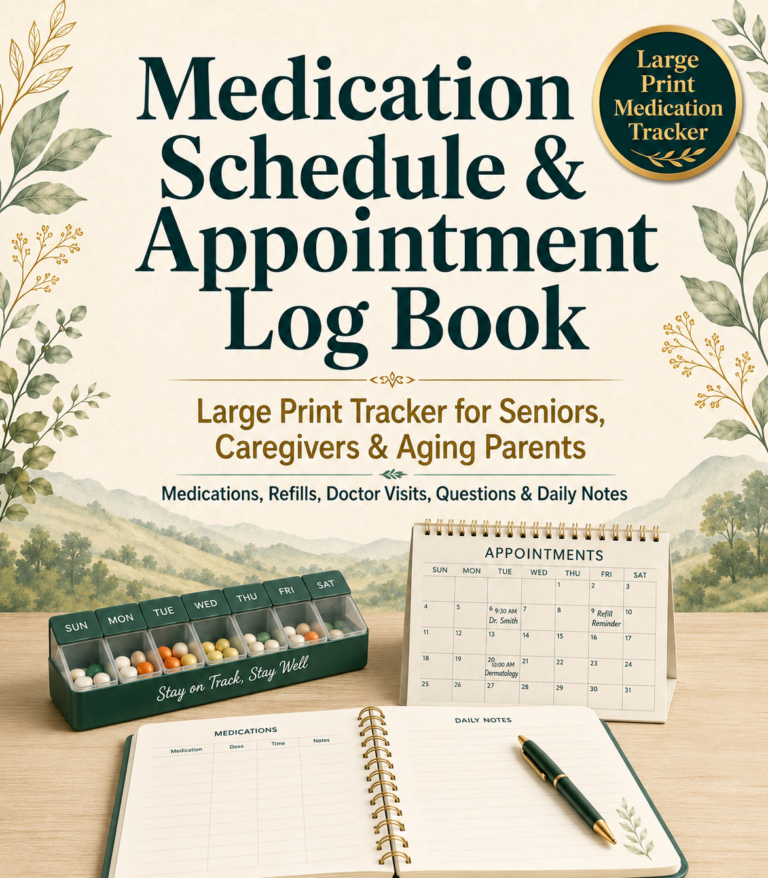
If your evening routine includes medication timing, caregiver notes, or appointment follow-ups, keep those details organized separately so the sleep log stays easy to read. This medication and appointment tracker guide is a useful companion for keeping health-related notes clearer without turning the sleep page into a catch-all notebook.
Use A 90-Night View
Seven nights can show early clues. Thirty nights show better patterns. Ninety nights can show seasons, schedule changes, stress waves, and habit experiments. That longer view is why a dedicated sleep log can be useful. You can test one change at a time and see whether the results last.
If you want a structured place to run those experiments, Sleep Signals: A 90-Night Log is made for bedtime experiments, evening routines, and wake-up patterns. Use it to track the details that matter to you, then bring clear notes to your own decisions or to a conversation with a professional if needed.
Start small tonight. Pick one routine change, write down the basics, and give yourself enough nights to learn something. You are not trying to become a perfect sleeper by tomorrow. You are looking for signals.