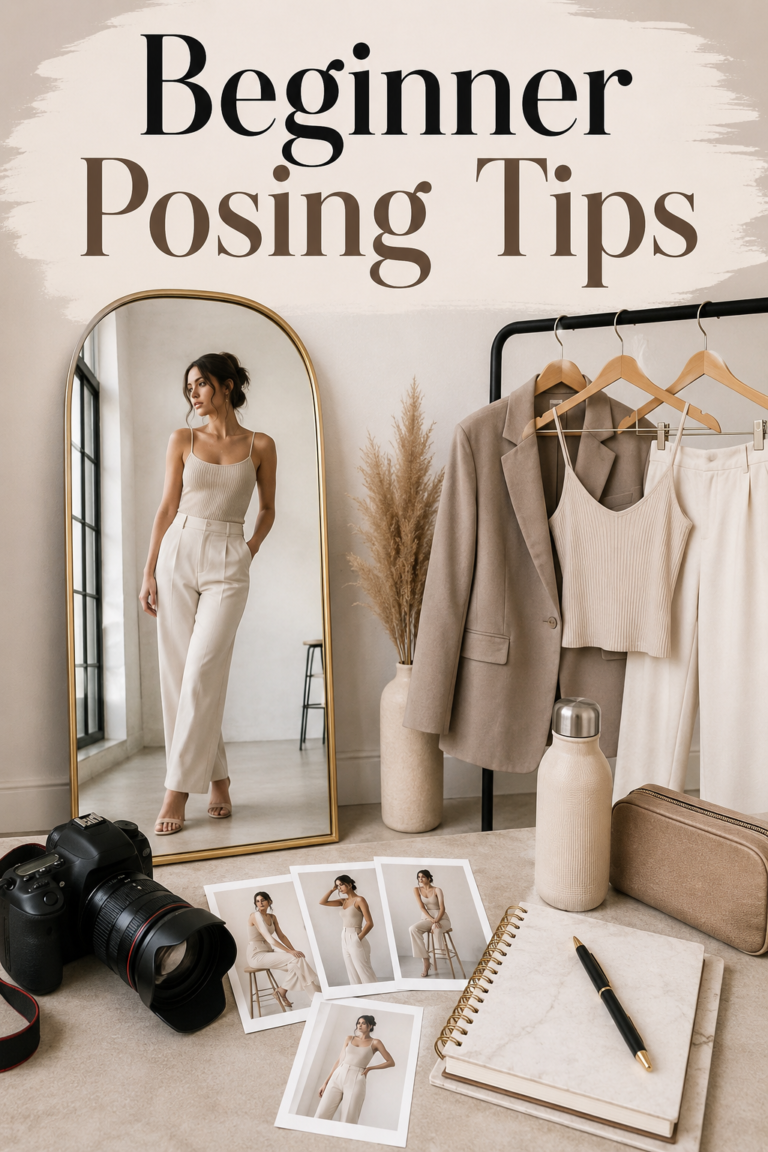

A beginner photoshoot feels a lot easier when your wardrobe is planned before the day starts. You do not need a closet full of expensive clothes, a stylist, or a complicated mood board. What you need is a small group of outfits that fit well, photograph cleanly, and help you move without constantly fixing straps, pulling at waistbands, or wondering whether the look matches the location.
The best photoshoot wardrobe is not always the trendiest outfit. It is the outfit that lets your face, posture, and personality show up clearly. For a first shoot, simple usually wins. Clean lines, comfortable layers, good shoes, and a few backup options can make the whole session feel calmer.
If you are preparing for your first model photoshoot, think of this as a practical packing guide. It is not about dressing perfectly. It is about showing up with enough variety that the photographer can create different looks without you feeling rushed or unprepared.
Start With The Purpose Of The Shoot
Before you choose clothes, ask what the photos are supposed to do. A portfolio starter shoot, a personal branding session, a social media content shoot, and a creative editorial shoot may need different wardrobe choices.
For a beginner model portfolio, choose outfits that show your natural shape and your ability to work with different moods. That usually means one simple fitted look, one casual lifestyle look, and one slightly polished look. For personal branding, choose clothes that match the audience you want to reach. For creative portraits, you can bring one expressive piece, but still keep backup basics nearby.
The purpose matters because wardrobe can either support the photo or distract from it. If the viewer notices only the shirt, the shoes, or a busy print, the outfit may be doing too much. Your wardrobe should help the image feel intentional while still letting you remain the focus.
Build Three Core Looks
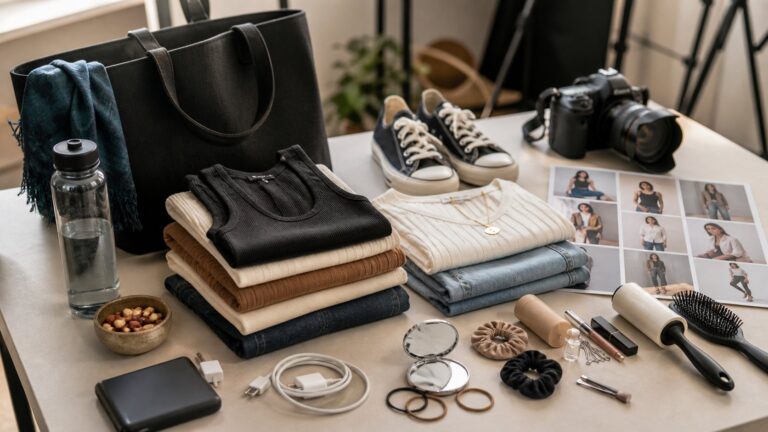
A good first-shoot wardrobe can be built around three simple looks. First, bring a clean basic outfit. This could be jeans with a fitted tank, a plain tee, a simple bodysuit, or a neutral sweater. The point is to give the photographer a simple foundation where your posture and expression matter more than the styling.
Second, bring a casual lifestyle outfit. This might be relaxed denim, a soft button-down, a cardigan, a sundress, a casual skirt, or a polished everyday look. It should feel like something you can move in naturally. Sitting, standing, walking, turning, and crossing your arms should all feel possible.
Third, bring one elevated look. This does not have to mean formal. It could be a blazer, a sleek dress, a monochrome outfit, tailored trousers, a structured jacket, or a simple outfit with stronger accessories. The elevated look gives the session more range and helps the gallery feel less repetitive.
Choose Colors That Photograph Cleanly
Neutral colors are beginner-friendly because they do not fight for attention. Black, white, cream, gray, denim, navy, olive, camel, and soft earth tones are easy to mix and usually work in many locations. If you love color, bring it, but choose one strong color at a time instead of wearing several competing colors in the same outfit.
Try to avoid tiny busy patterns unless the photographer specifically wants them. Small stripes, tiny florals, and high-contrast prints can sometimes pull attention away from your face or create visual noise. Larger blocks of color, simple textures, and clean silhouettes are usually safer for a first shoot.
If you are unsure, lay your outfits on the bed and take a quick phone photo. Look at the photo from across the room. If one item overwhelms everything else, it may be better as an optional piece instead of a core outfit.
Think About Fit Before Style
Fit is one of the most important parts of photoshoot wardrobe. Clothes that are too tight can make posing feel stiff. Clothes that are too loose can hide your shape or require constant adjusting. The goal is not to dress a certain size. The goal is to bring clothing that sits well on your body and lets you move.
Try each outfit before the shoot. Sit down. Raise your arms. Turn sideways in a mirror. Walk a few steps. Bend slightly. If something twists, slides, gaps, wrinkles in an unflattering way, or makes you feel distracted, either fix it before shoot day or leave it at home.
This is especially important for new models because your attention will already be on posing, expression, directions, and camera awareness. Clothing that behaves well gives you one less thing to manage.
Bring Layers For Variety
Layers are one of the easiest ways to create more looks without packing a suitcase. A blazer, denim jacket, cardigan, button-down shirt, scarf, vest, or light coat can change the mood of an outfit quickly. A plain tank with jeans can become casual, polished, relaxed, or editorial depending on the layer.
Layers also help with posing. You can hold the jacket, adjust the cuff, drape it over your shoulder, button and unbutton it, or use it to create movement. If you feel awkward with your hands, a layer can give you something natural to do.
Choose layers that match at least two outfits. If one jacket only works with one look, it may still be worth bringing, but versatile pieces earn their space in your bag.
Do Not Forget Shoes
Shoes can change body posture and the feel of a photo. Bring at least two options if possible. A clean sneaker, boot, flat, sandal, heel, or polished casual shoe can all work depending on the concept.
Make sure the shoes are clean, comfortable enough to stand in, and appropriate for the location. If the shoot is outdoors, avoid shoes that will sink into grass or make walking difficult unless you also bring a practical backup. If you bring heels, bring flats for moving between spots.
The shoe does not always appear in every image, but when it does, it should look intentional. A strong outfit can feel unfinished if the shoes are an afterthought.
Pack Small Styling Helpers
A photoshoot wardrobe bag should include more than clothes. Pack a lint roller, safety pins, fashion tape, hair ties, a small mirror, neutral undergarments, a simple steamer if available, and a bag for dirty or worn items. Bring water, a snack, and anything you need for comfort between sets.
Neutral undergarments matter because straps, seams, and colors can show through clothing. Try outfits with the undergarments you plan to wear. If a bra strap, waistband, or seam is visible in a distracting way, solve it before the shoot instead of hoping it will not show.
A little preparation protects your confidence. When something needs a quick fix, you will have the tool instead of stopping the flow of the session.
What To Avoid For A First Shoot
Avoid clothes you have never worn before unless you test them first. Avoid pieces that wrinkle badly within minutes. Avoid items that require constant pulling, pinning, or adjusting. Avoid logos unless they are part of the concept. Avoid overly busy prints if your goal is a clean beginner portfolio.
Also avoid bringing only one outfit. Even if the shoot is short, one backup option can save the day if the first outfit does not work with the lighting, background, or mood.
Most importantly, avoid choosing clothes that make you feel unlike yourself. A first shoot already asks you to be brave. Your wardrobe should support that, not make you feel like you are performing in someone else’s costume.
Free Wardrobe Checklist
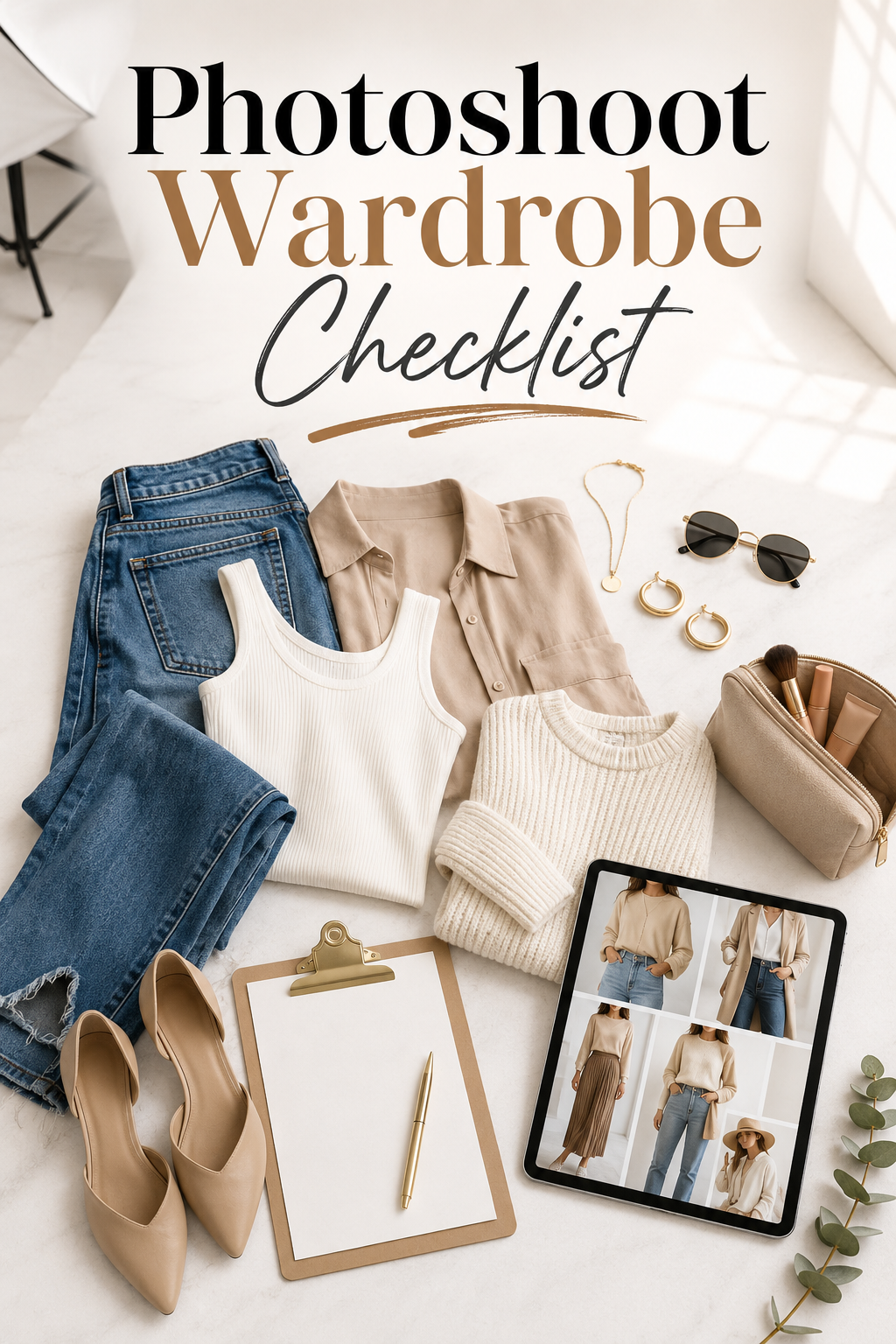
A helpful freebie for this post is a one-page wardrobe checklist. Include three outfit spaces, shoe notes, accessory notes, grooming reminders, backup items, and a small section for location details. Use it a few days before the shoot, then again the night before packing.
The checklist does not need to be fancy. It simply keeps decisions visible. When your outfit plan is on paper, you are less likely to forget the belt, the second pair of shoes, the lint roller, or the simple backup top that might become the best look of the day.
Helpful Next Step
If you are still planning the whole session, read the Beginner Model Photoshoot Checklist next. It walks through the bigger shoot-day plan so your wardrobe, timing, props, communication, and expectations all work together.
A good first photoshoot does not come from doing everything perfectly. It comes from making the next decision easier. Wardrobe is one of the best places to start because the right outfits help you feel prepared before the camera ever turns on.
Related Reading
Helpful Sources
A Simple Way To Use This This Week
If this topic feels useful but a little big, keep the first step small. Pick one idea from this guide, write it on a sticky note, and try it once before you add anything else. A small repeatable action is easier to keep than a perfect plan. You can always come back later, add a printable page, choose a matching book, or build a longer routine once the first step already feels comfortable.
The goal is not to make what to wear to a beginner photoshoot complicated. The goal is to make the next step clear enough that you can actually start today.