
Protecting your peace is easy to misunderstand. Some people hear it and think it means cutting everybody off, becoming cold, or treating every disagreement like a threat. That is not the point. A healthier version of protecting your peace is about access. It asks a simple question: who gets how much of your time, energy, attention, and trust?
You can care about people and still have limits. You can be kind without being constantly available. You can love family, friends, partners, and coworkers without letting every demand land in the center of your life. Peace is not isolation. Peace is a clearer system for deciding what you allow close.
Start with access, not anger
When someone drains you, it is tempting to make a permanent judgment right away. Sometimes distance is necessary, but many situations need a calmer first step. Instead of asking, “Should I cut this person off?”, ask, “What level of access have I been giving this person, and is that level still wise?”
Access can be adjusted. Someone may move from inner-circle access to limited access. A person may still be greeted with respect but no longer get private details, late-night calls, emergency-level attention, or repeated second chances. That is not cruelty. It is stewardship.
Notice what happens after contact
A useful clue is how you feel after repeated contact. Do you usually feel calmer, clearer, encouraged, or more honest? Or do you feel smaller, rushed, guilty, confused, defensive, or pulled into drama? One hard conversation does not define a person. A repeated pattern does deserve attention.
Protecting your peace means you stop ignoring the pattern just because you can explain it. You may understand why someone behaves a certain way and still decide they should not have the same access to you. Compassion and access are not the same thing.
Use levels instead of all-or-nothing decisions
All-or-nothing thinking makes boundaries harder than they need to be. Try thinking in levels. Inner-circle people get honesty, consistency, mutual care, and deeper access. Close people get regular connection and trust built over time. Casual people get kindness and light connection. Limited-access people get respect, but not the center of your schedule or emotional life.
This approach gives you options. You do not have to announce every adjustment. Sometimes the boundary is simply answering later, sharing less, declining the invitation, ending the conversation sooner, or refusing to argue in circles.
Protect peace without becoming suspicious
Discernment is different from paranoia. The goal is not to assume everyone is using you. The goal is to pay attention. Some people are assets in your life because they bring honesty, repair, encouragement, accountability, steadiness, and mutual effort. Some people become liabilities because every interaction costs more than it should and nothing changes.
Even then, the language is a framework, not a label for someone whole life. You are not reducing people to objects. You are looking at the effect of a relationship pattern on your peace, focus, and future.
Try small boundary scripts
A boundary does not need a speech. Try simple lines such as: “I cannot talk about this tonight.” “I am not available for that.” “I need time to think before I answer.” “I am not going to keep replaying this conversation.” “That does not work for me.” Short lines are often better because they give less room for debate.
If you are used to people-pleasing, short boundaries may feel rude at first. That feeling does not automatically mean you did something wrong. It may only mean you are practicing a new form of self-respect.
Make room for people who bring peace
Protecting your peace is not only about stepping back from draining people. It is also about noticing the people who show up well. Who tells the truth kindly? Who respects your no? Who celebrates your growth without making it about them? Who corrects you without humiliating you? Who helps your nervous system settle instead of spin?
Those people deserve appreciation and appropriate access. A better circle is not just a smaller circle. It is a wiser circle.
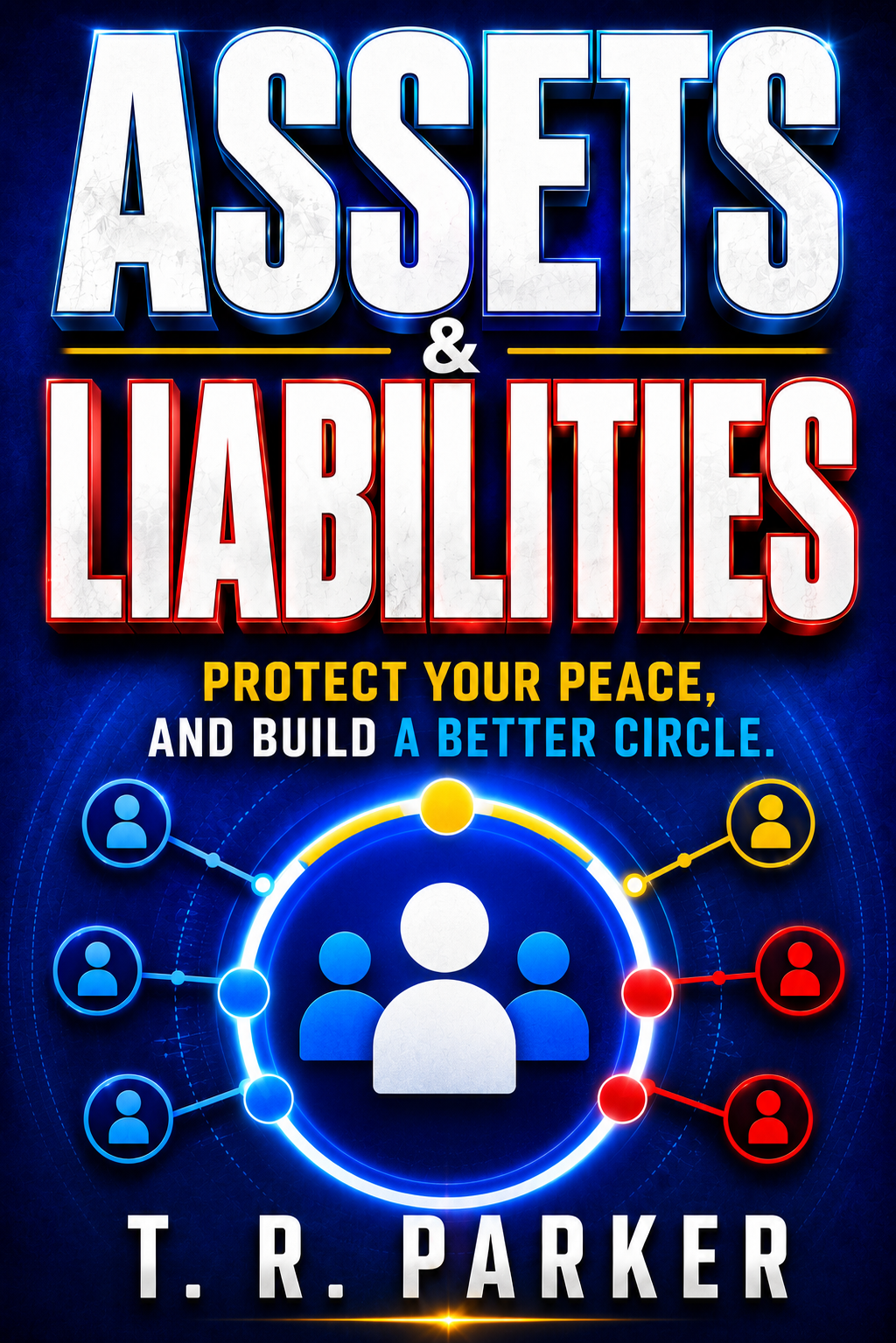
Assets & Liabilities is publishing now
Assets & Liabilities: Protect Your Peace and Build a Better Circle by T. R. Parker is moving through KDP publishing. The direct Shop Now link will be added here as soon as the Amazon listing is public.
This post is part of the launch cluster for the book. Use it as a practical reflection guide, not therapy, diagnosis, legal advice, or a promise that every relationship question has a simple answer.