

A circle audit is a simple reflection tool. It helps you look at who has access to your time, attention, trust, and energy. It is not a clinical test, a relationship diagnosis, or a reason to become suspicious of everyone. It is a practical way to ask whether your current circle matches the life you are trying to build.
Most people do not choose their circle all at once. Access happens slowly. A coworker becomes a venting partner. A friend becomes an emergency contact. A relative gets a direct line to your emotions. Someone who has not earned deeper trust keeps getting deeper details. A circle audit pauses the automatic pattern and lets you review it with intention.
Draw the circle first
Start by writing your name in the middle of a page. Around it, make three or four rings. The center ring is for people with the most access. The next ring is for close but not central relationships. The next ring is casual connection. The outer ring is limited access. This is not about ranking human worth. It is about matching access to trust, consistency, and impact.
Add names honestly. Do not write where someone “should” be. Write where they currently are in real life. Who gets your quickest replies? Who hears your private details? Who can interrupt your day? Who influences your mood? Who gets repeated chances without changed behavior?
Review time, trust, and energy
Once the names are on the page, look at three areas: time, trust, and energy. Time asks who receives your hours. Trust asks who receives your private thoughts, plans, and vulnerabilities. Energy asks who affects your peace before, during, and after contact.
A person may deserve time but not deep trust. Someone may be fun casually but not wise enough for private access. Someone may be family but still need limits. The circle audit makes those distinctions visible.
Ask practical questions
- Who respects my no without punishing me for it?
- Who only shows up when they need something?
- Who makes honesty feel safe?
- Who repeatedly turns small issues into emotional emergencies?
- Who celebrates my growth without competing with it?
- Who drains me even when nothing dramatic happened?
- Who deserves more appreciation and better access?
These questions work best when you look for patterns, not one-off moments. Everyone has bad days. A circle audit is about repeated evidence.
Decide what needs to move
After the audit, pick one small adjustment. You might move someone from inner-circle access to close access. You might stop sharing sensitive plans with a person who treats your goals lightly. You might make more time for a steady friend you have taken for granted. You might decide not to answer certain calls at night.
The most useful circle audit leads to action, not drama. You do not need to announce the entire map. You only need to act with more clarity.
Do the audit again later
Relationships change. People grow, repair, disappoint, mature, or drift. Your access levels can change too. Revisit the circle audit when you enter a new season, after a major conflict, before a big goal, or whenever your peace feels crowded by other people expectations.
The point is not to harden your heart. The point is to stop living with an unlocked door around your attention.
Keep reading
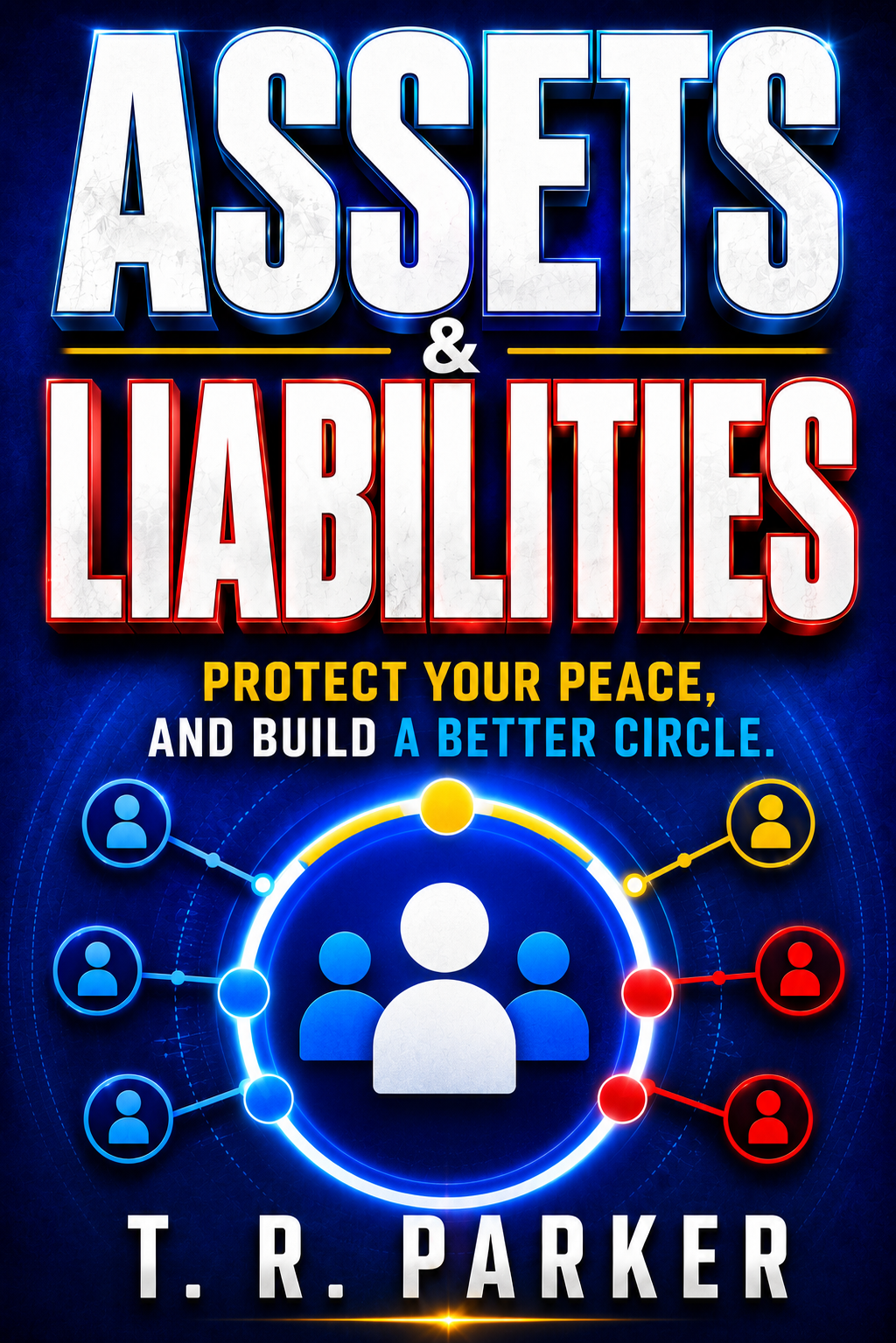
Assets & Liabilities is publishing now
Assets & Liabilities: Protect Your Peace and Build a Better Circle by T. R. Parker is moving through KDP publishing. The direct Shop Now link will be added here as soon as the Amazon listing is public.
This post is part of the launch cluster for the book. Use it as a practical reflection guide, not therapy, diagnosis, legal advice, or a promise that every relationship question has a simple answer.